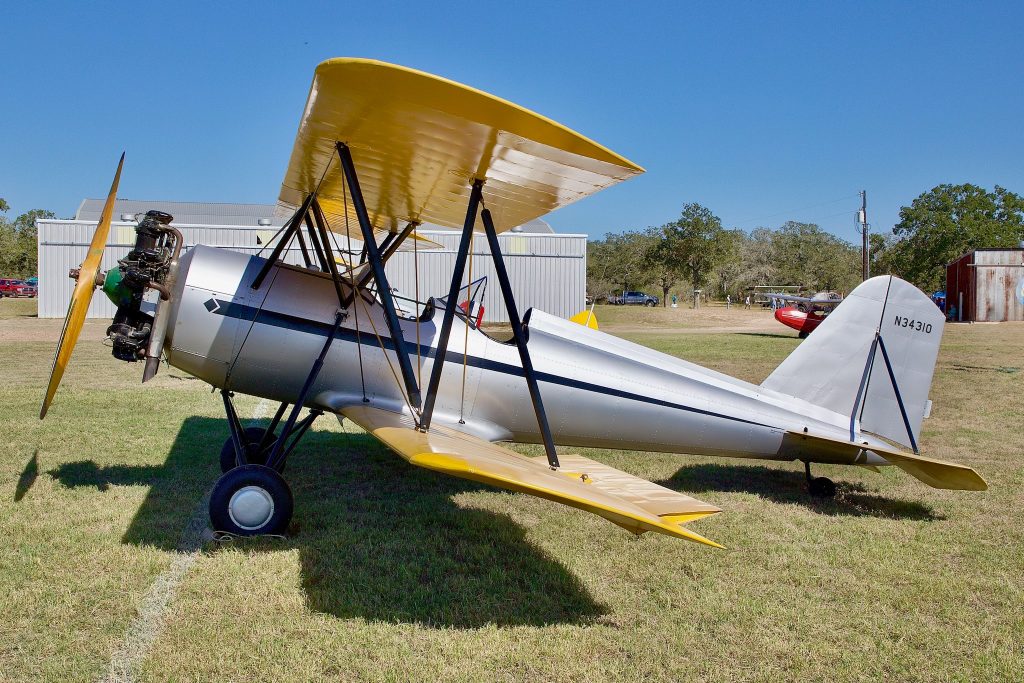
Photo by G.R. Dennis Price – Aviation Photographer
The Meyers OTW‑160 is a two‑seat, open‑cockpit biplane designed by Allen H. Meyers as a primary trainer for civilian and military pilots in the years surrounding World War II. “OTW” stands for “Out To Win,” reflecting the company’s confidence in the aircraft’s performance. Built with a steel‑tube fuselage, fabric covering, and wooden wings, the OTW‑160 was powered by a 160‑hp Kinner radial engine, giving it reliable handling and stable flight characteristics ideal for student training. Although produced in limited numbers, the OTW series played an important role in preparing pilots during the wartime training boom, and surviving examples like this 1943 model represent an important chapter in American aviation history.
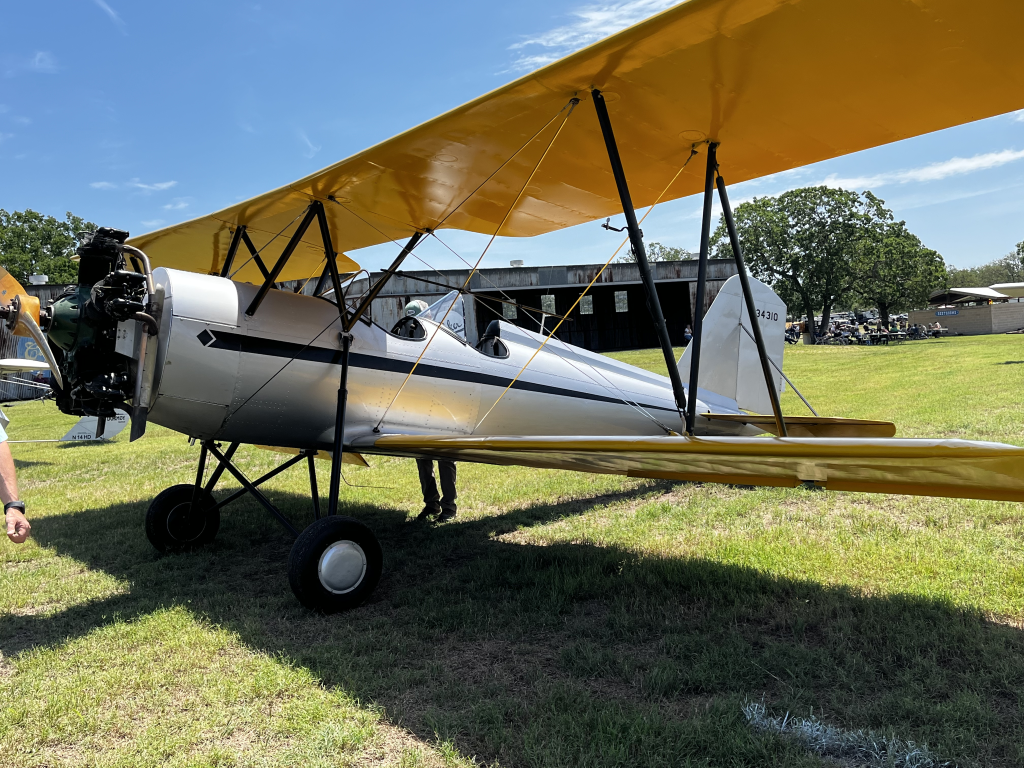
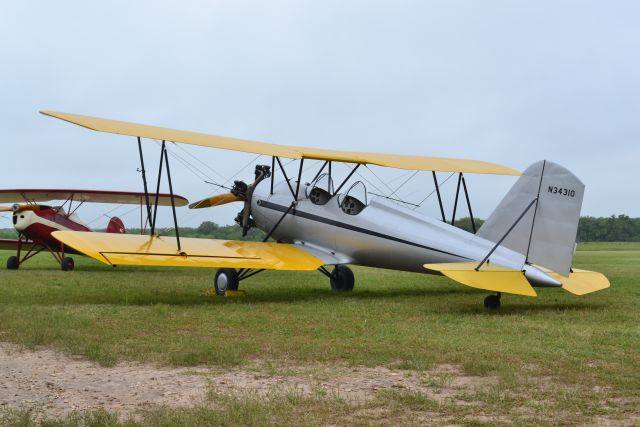
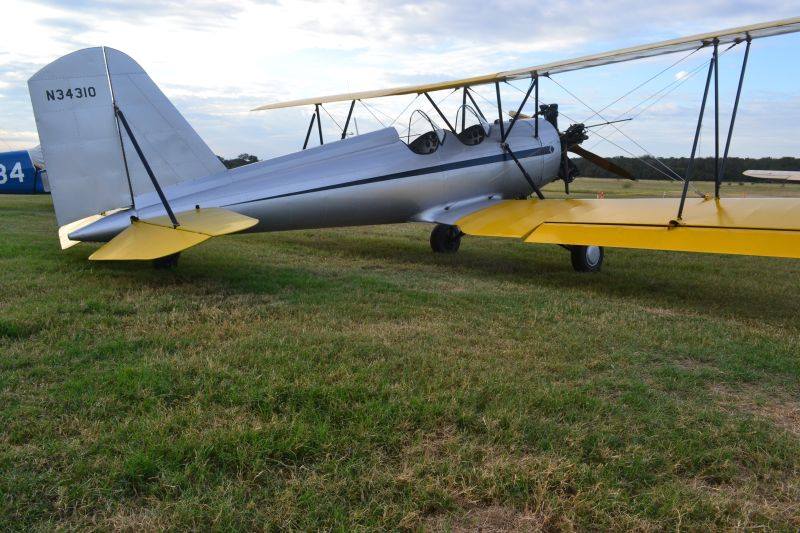
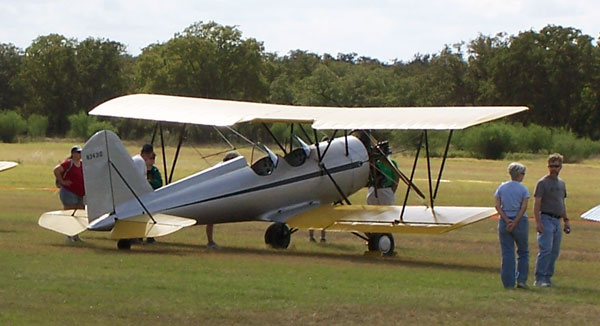
Recorded during Fall Fly In (2016)
General characteristics
- Crew: 2
- Length: 25 ft 11 in (7.91 m)
- Wingspan: 30 ft 0 in (9.14 m)
- Height: 8 ft 6 in (2.59 m)
- Wing area: 262 sq ft (24.3 m2)
- Empty weight: 1,340 lb (608 kg)
- Gross weight: 1,910 lb (866 kg)
- Fuel capacity: 26 US gal (22 imp gal; 98 L)
- Powerplant: 1 × Kinner R-56 5-cyl. air-cooled radial piston engine, 160 hp (120 kW)
- Propellers: 2-bladed fixed pitch propeller
Performance
- Maximum speed: 120 mph (190 km/h, 100 kn)
- Cruise speed: 105 mph (169 km/h, 91 kn)
- Range: 400 mi (640 km, 350 nmi)
- Service ceiling: 17,500 ft (5,300 m)
- Rate of climb: 1,200 ft/min (6.1 m/s)
- Wing loading: 7.25 lb/sq ft (35.4 kg/m2)
- Power/mass: 11.81 lb/hp (7.17 kg/kW)
- Landing speed: 40 mph (35 kn; 64 km/h)